
Key Metrics Introduction (User Acquisition, Page Views & Unique Page Views, Demographic Details)
In digital marketing, analyzing website performance is essential to understand how users interact with content and how effective marketing strategies are. Three key areas in Google Analytics 4 (GA4) help provide these insights: User Acquisition, Engagement (Page Views), and Demographic Details.
User Acquisition shows how visitors first arrive at the website, helping identify which channels are most effective in attracting new users.
Page Views and Engagement metrics indicate how users interact with different pages, revealing which content captures attention and keeps users engaged.
Demographic Details provide insights into where users are located, helping evaluate whether the website is reaching the intended audience and how engagement varies across regions.
These metrics are important because they allow marketers to make data-driven decisions to improve user experience, increase engagement, and optimize marketing strategies.
User Acquisition – First User Source / Medium
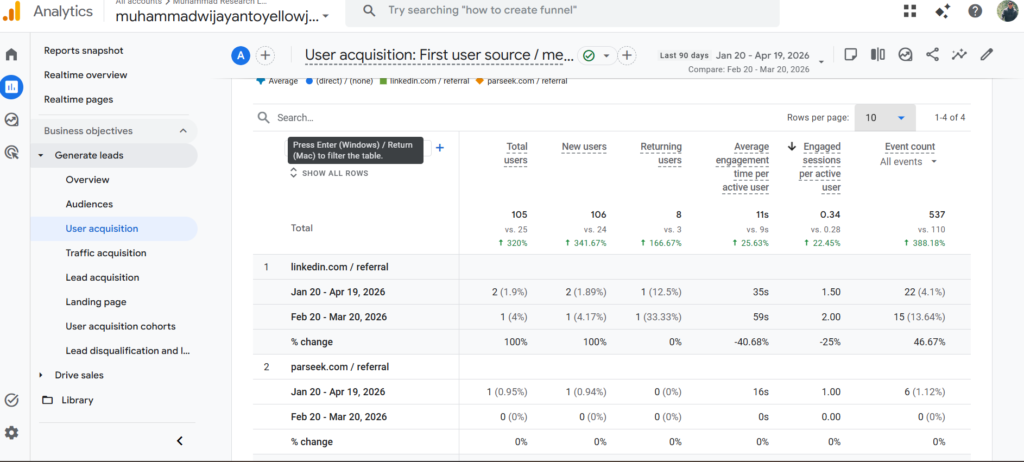
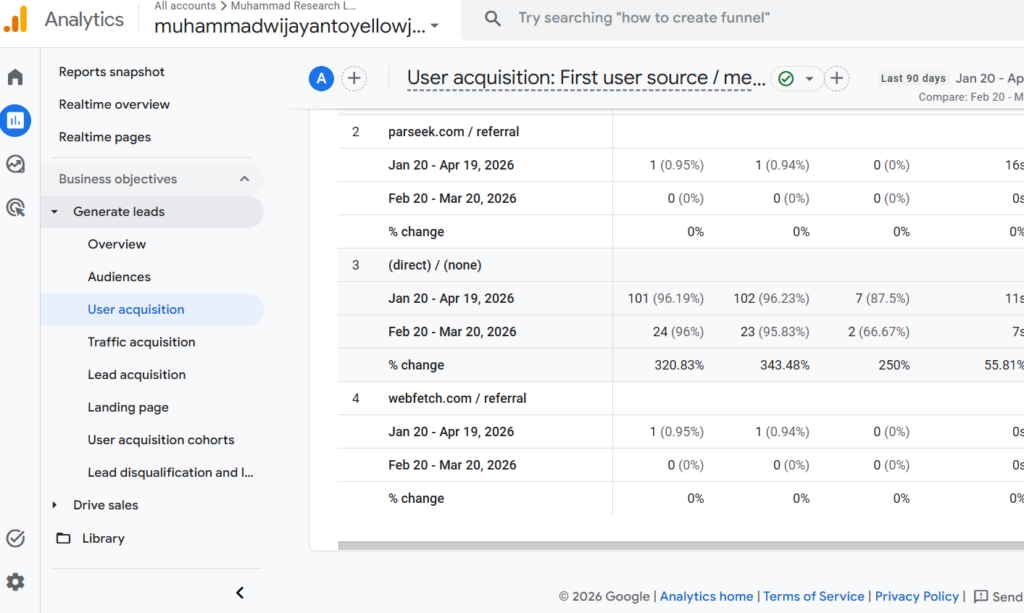
The “First user source / medium” dimension is important because it shows where users first discovered the website. This helps identify which marketing channels are effective in attracting new visitors.
To analyze user behavior, the following metrics were used: New Users, Average Engagement Time, and Engaged Sessions per Active User. These metrics are important because they measure traffic growth, user interest, and the quality of engagement.
Based on the data, the majority of users (96%) came from direct traffic, meaning users either typed the website URL directly or accessed it through saved links. This suggests that brand awareness or direct sharing is the primary driver of traffic.
However, LinkedIn referral traffic, although small in number, shows a significantly higher average engagement time (35 seconds) compared to direct traffic (11 seconds). This indicates that users coming from LinkedIn are more engaged and potentially more interested in the content.
This suggests that while direct traffic generates volume, LinkedIn provides higher-quality traffic, and increasing activity on LinkedIn could improve both traffic and engagement.
Prompt used for analysis:
“Analyze this GA4 User Acquisition data from ‘First user source / medium.’ Explain where traffic is coming from, which source performs best, and what improvements can be made using metrics such as new users, average engagement time, and engaged sessions per active user.”
Engagement – Page Title and Screens
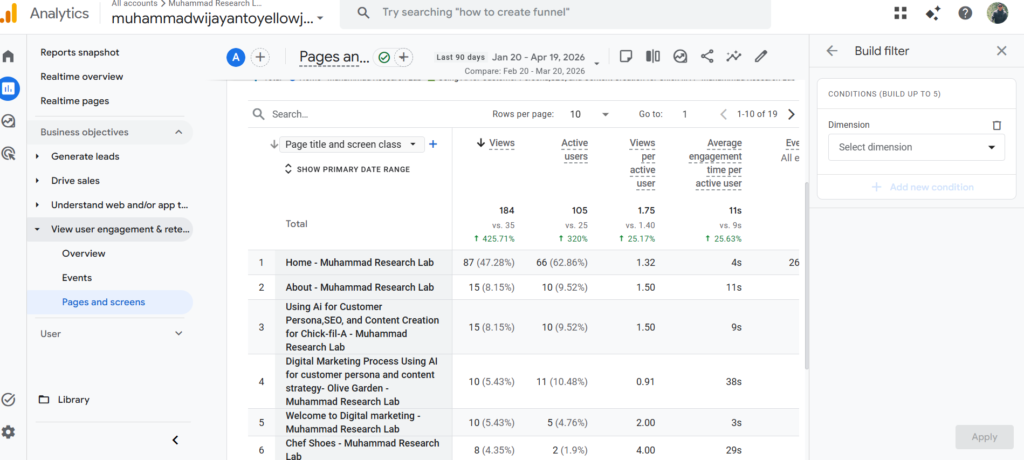
The “Page title and screens” dimension is important because it shows which specific pages users visit and how they interact with each page. This helps identify which content attracts attention and which content keeps users engaged.
The analysis used Views, Users, and Average Engagement Time, as these metrics show popularity, audience size, and content effectiveness.
Based on the data, the Home page received the highest number of views (47% of total traffic), indicating that it is the main entry point for users. However, the average engagement time is only 4 seconds, suggesting that users are not staying long on the homepage.
In contrast, the page titled “Digital Marketing Process Using AI – Olive Garden” has the highest engagement time at 38 seconds, indicating strong user interest despite lower traffic.
Additionally, pages such as “Chef Shoes” (29 seconds) and “Services” (23 seconds) show relatively strong engagement, suggesting that more specific or niche content performs better in retaining user attention.
On the other hand, the “Chick-fil-A” page has very low engagement (1 second), indicating that the content may not be relevant or engaging to users.
Overall, this suggests that while the homepage drives traffic, content-focused pages generate higher engagement, and improving homepage quality while promoting high-performing content could significantly enhance user experience.
Prompt used for analysis:
“Analyze this GA4 data from ‘Page title and screens.’ Explain which pages are most popular, which pages have the highest engagement, and what improvements can be made using views, users, and average engagement time.”
User Attribute – Demographic Details
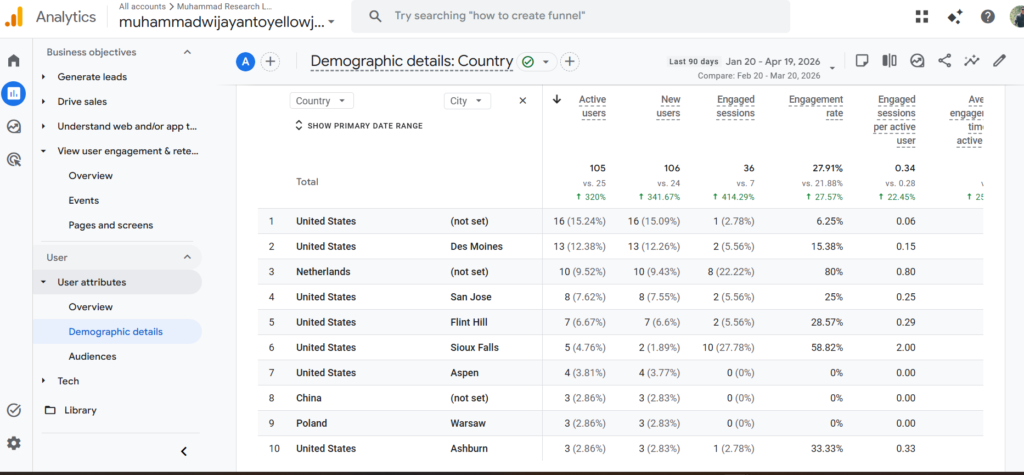
The “Country and City” dimension is important because it helps identify where users are located and how different geographic audiences interact with the website. This allows marketers to evaluate whether they are reaching their target audience and how engagement varies across locations.
The analysis used Active Users, Engagement Rate, Average Engagement Time per Active User, and Engaged Sessions per Active User. These metrics are important because they measure audience size, engagement quality, and user interaction levels.
Based on the data, the majority of users come from the United States, indicating that the website is primarily reaching a domestic audience. Within the U.S., cities such as Des Moines, San Jose, Flint Hill, and Sioux Falls contribute to overall traffic.
However, in terms of engagement quality, the Netherlands stands out with an engagement rate of 80%, indicating very high user interest.
Additionally, Sioux Falls shows strong engagement, with a 58.82% engagement rate and 2.00 engaged sessions per active user, suggesting that users in this location interact with the website multiple times and are highly engaged.
In contrast, locations such as China and Poland show low engagement (0%), indicating that users from these regions are not interacting effectively with the content.
Overall, this suggests that while the website reaches a global audience, engagement quality is higher in specific regions, and focusing marketing efforts on these high-performing locations could improve overall performance.
Prompt used for analysis:
“Analyze this GA4 Demographic data from ‘Country and City.’ Explain where my audience is from, which locations have the highest engagement, and what this means for my marketing using metrics such as active users, engagement rate, average engagement time per active user, and engaged sessions per active user.”
In conclusion, this analysis shows that while the website successfully attracts users, engagement varies across sources, pages, and locations. Direct traffic generates the highest volume, but referral sources like LinkedIn provide higher engagement quality. Content-focused pages perform better than general pages like the homepage, and certain locations such as Sioux Falls and the Netherlands demonstrate stronger interaction.
Conclusion
Therefore, improving content quality, optimizing key pages such as the homepage, and focusing on high-engagement traffic sources and geographic regions can significantly enhance overall website performance.;